Best Lightweight Hair Dryer for Straight Hair

Seven lightweight hair dryers compared for straight hair, ranked by airflow, weight and included attachments, with a clear winner and honest trade-offs.

By Bailey CunninghamUpdated 17 min read
On this page
- Best lightweight hair dryer for straight hair at a glance
- How I screened these seven dryers
- Why weight is the wrong first question
- 1. slopehill Professional Ionic Hair Dryer — Best overall
- 2. Shark SpeedStyle Pro Ionic Hair Dryer — Best premium
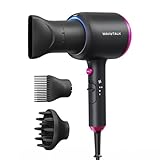
- 3. Wavytalk Blown Away Ionic Hair Dryer — Best minimal setup
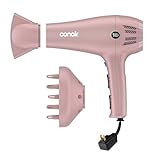
- 4. Conair Hair Dryer with Diffuser & Concentrator — Best for pros
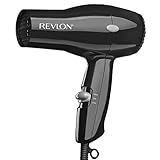
- 5. Revlon Compact Hair Dryer — Best budget pick
- 6. REVLON One-Step Straightening Brush Hair Dryer — Runner-up
- 7. Conair Ionic Hair Dryer with Concentrator — Best for beginners
- What the wattage number actually tells you
- Which attachments matter for a straight blowout?
- How long will one of these last on daily use?
- The verdict
- FAQ
The best lightweight hair dryer for straight hair is the slopehill Professional Ionic Hair Dryer, a 7.87 in body with a claimed 21,000 rpm motor and both a concentrator and a diffuser in the box. If you have fine hair and a sensitive scalp, the Shark SpeedStyle Pro takes over: it weighs 1.66 lb and, per Shark, caps its air at 230°F.
Best lightweight hair dryer for straight hair at a glance
| Pick | Weight | Attachments | Price |
|---|---|---|---|
Best overall slopehill Professional Ionic Hair Dryer |
not listed | 2 concentrators, 1 diffuser | Check Price |
Best premium Shark SpeedStyle Pro Ionic Hair Dryer |
1.66 lb | Turbo concentrator | Check Price |
Best minimal setup Wavytalk Blown Away Ionic Hair Dryer |
1.37 lb | 3 attachments (claim) | Check Price |
Best for pros Conair Hair Dryer with Diffuser & Concentrator |
not listed | Concentrator + diffuser | Check Price |
Best budget pick Revlon Compact Hair Dryer |
1.18 lb | None listed | Check Price |
| 1.65 lb | Built-in paddle brush | Check Price | |
Best for beginners Conair Ionic Hair Dryer with Concentrator |
1.21 lb | Concentrator | Check Price |




How I screened these seven dryers
I started with the category listings under Hair Dryers, then compared the published specifications side by side. Weight was the first filter, because a straight-hair blowout is an arms-up job that can run five to fifteen minutes, and the difference between 1.18 lb and 1.66 lb is real over that stretch. Airflow claims came next, then attachments, then warranty length.
Two things about the shortlist you should know up front. First, the "straight hair" modifier in the search is only partly reflected in the listings. Most of these dryers are marketed for every hair type, and only a couple call out straight styling specifically. Treat the modifier as your judgement to apply, not a feature the product certifies.
Second, five of the seven publish a weight; two do not. That is not a small gap in a lightweight hair dryer roundup. I kept both unweighed picks in because their airflow and attachment stories are strong, but I flag it in their sections, and if a printed weight is a hard requirement for you, the four picks that publish one at or under 1.66 lb are your shortlist.
The set spans:
- Two Revlon models, one compact and one one-step brush.
- Two Conair models, one entry and one with a diffuser.
- Three ionic dryers from slopehill, Shark and Wavytalk.
That mix lets the roundup compare weight bands, wattage claims, and warranty commitments without leaning on a single brand's marketing.
Why weight is the wrong first question
Every dryer here is marketed as light. The published figures cluster tight: 1.18 lb, 1.21 lb, 1.37 lb, 1.65 lb, 1.66 lb. That is a spread of under half a pound across five picks, and once a dryer drops below about 1.7 lb, the shift that matters more is airflow.
Straight hair, especially medium to long, dries by air volume moving water off the strand. A heavier motor that pushes more air can finish the job faster than a featherweight that has to sit on your roots for an extra two minutes. The slopehill claims 21,000 rpm; Shark claims airflow speeds reaching 0-100 mph in less than a second; Wavytalk cites a 1875W motor and claims 2x faster drying. Those numbers are manufacturer claims, not lab measurements, and they are not directly comparable because they measure different things. But together they tell you the field competes on airflow, not on shaving grams.
The right first question is: how long is my hair, and how thick? Fine, chin-length straight hair is fine with a compact 1875W entry dryer. Mid-back thick straight hair wants the highest airflow claim you can find, and the weight you carry for it is worth the seconds saved.
1. slopehill Professional Ionic Hair Dryer — Best overall
The slopehill wins because it pairs the highest published motor speed in the set with both a concentrator and a diffuser in the box, at a mid price position.
Best for: daily blowouts on medium to thick straight hair Skip it if: you want a published weight figure before buying
The slopehill's headline claim is a motor "up to 21,000 rpm", and it is the only dryer in this set to publish a motor-speed figure at all. For straight hair, that airflow claim matters more than the 1800W rating, because wattage tells you what the heater draws and rpm tells you how fast the air moves. Fast air is what lifts a straight blowout off wet and finishes it before the ends fry.
The body measures 3.94 x 3.94 x 7.87 in, which is short for a full-size dryer: the 7.87 in from nozzle to end cap is the shortest here after the Revlon Compact. That gives it a stubby, hand-close balance that suits arms-up straightening. slopehill lists three heat settings and a cool-shot button, and the kit includes two concentrator nozzles and a diffuser, so a curly-haired housemate is covered too.
The trade-off is transparency. slopehill publishes dimensions and a model number but not a weight, and it has by far the lowest sales rank in this group, meaning it moves faster than the rest. That is popularity, not proof. Take the 21,000 rpm as a claim and judge the box in your hand.
Pros:
- Highest published motor-speed figure in this set
- Three attachments, including a diffuser
- Shortest full-size body here at 7.87 in
- Three heat settings plus cool shot
- Sells faster than the other six here
Cons:
- No published weight in the listing
- Motor claim is manufacturer-stated, not measured
- No published warranty length
2. Shark SpeedStyle Pro Ionic Hair Dryer — Best premium
The Shark earns the premium slot on scalp-safe temperature control and Shark's published cap of 230°F on air out.

Best for: fine to medium hair and a heat-cautious scalp Skip it if: you are shopping the lower end of the set
At 1.66 lb, the Shark SpeedStyle Pro is the heaviest of the four dryers with a published weight, and the most expensive pick here. Both of those facts matter because you are paying for what the motor and the thermostat do, not for a featherlight hand feel. Shark says the dryer measures and regulates temperature 1,000 times a second and never exceeds 230°F, well below the 302°F it identifies as the heat-damage line. For straight hair that gets a daily blowout, that ceiling is the reason to consider this pick.
The body runs 7.91 x 6.5 x 1.88 in, and Shark ships it with a turbo concentrator whose 360° rotatable nozzle lets you point airflow flat along the strand without twisting your wrist. The Scalp Shield mode drops air temperature further for root-drying comfort. Shark markets the dryer for fine-medium hair, which is worth checking against your own texture before you commit at this price.
The honest weakness is that the airflow claim ("0-100 mph in less than a second") is not a directly comparable figure and no motor-speed rpm is published. You are trusting Shark's ecosystem rather than a spec-sheet duel with the slopehill.
Pros:
- Published 230°F air cap, per Shark
- Scalp Shield mode for root drying
- 360° rotatable concentrator nozzle
- Slim 1.88 in profile in the hand
- Newest release in the set
Cons:
- Heaviest of the picks with a published weight
- Most expensive pick here
- No published motor-speed figure
3. Wavytalk Blown Away Ionic Hair Dryer — Best minimal setup
The Wavytalk wins on paperwork: it is the only pick here that publishes a 10-year warranty.

Best for: one-tool routines that need a long warranty Skip it if: you want the lightest hand-held here
Warranty length is not glamorous, but on a daily tool it is money. The Wavytalk lists a 10-year warranty, and none of the other six picks in this set match it. The next-longest published warranty here is Conair's limited two-year on the 256NRL. That is a five-fold gap.
The dryer weighs 1.37 lb and measures 3.3 x 10.3 x 7.8 in, so it is longer than the slopehill but only slightly heavier than the Revlon Compact. Wavytalk cites a 1875W motor and claims 2x faster drying, three temperature settings, two airflow speeds and a cool option. The listing calls out "3 attachments for every style", but the specific tools are not itemised in the data I have, so treat the count as claimed and check the box on arrival.
For straight hair, the concentrated nozzle Wavytalk describes is the piece that does the work; the ionic output is the piece that Wavytalk claims tames frizz. The frizz claim is the manufacturer's, not a measurement. The trade-off against the slopehill is that Wavytalk publishes no motor-speed figure, so you are comparing a wattage claim on one side to an rpm claim on the other.
Pros:
- 10-year warranty, the longest in the set
- 1.37 lb published weight
- Three temperature settings and two speeds
- Cool-air option for setting styles
Cons:
- Attachment list not itemised in the listing
- Frizz-reduction claim is manufacturer-stated
- Most expensive tier alongside the Shark
4. Conair Hair Dryer with Diffuser & Concentrator — Best for pros
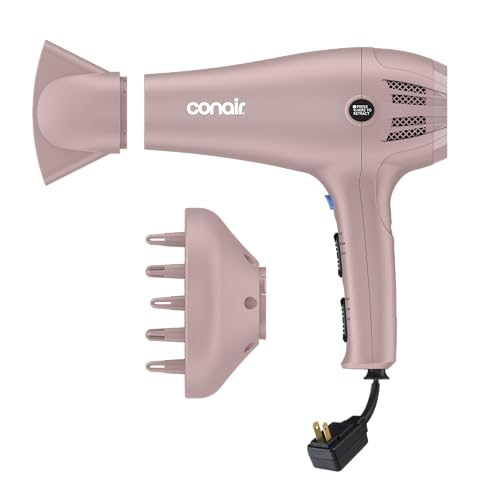
The Conair 209L delivers salon-style flexibility, with 1875W, three heat settings, two speeds and both attachments, at the second-cheapest position in this set.
Best for: salon-style flexibility on an entry budget Skip it if: you need a published weight in the listing
If you want a dryer that behaves like the ones on the salon shelf without paying salon prices, the 209L is the pick. It ships as a three-piece set (dryer, concentrator, diffuser), Conair rates it at 1875W, and it lists three heat settings plus two speeds plus a cool shot. That is enough control for a proper straight blowout: high heat and high speed to pull water, medium heat with the concentrator angled flat to smooth, cool shot to finish.
The retractable 5 ft cord is a small feature that pays off in a shared bathroom, because a cord that lives inside the handle does not tangle with a curling iron. Conair claims tourmaline ceramic construction and ionic output for shine and frizz control; those are attributed claims, not measurements.
The weakness is the same one that dogs the slopehill: no published weight. Conair publishes 9.13 x 3.88 x 10.9 in for dimensions and a matte-light-pink finish, but the figure a lightweight-dryer shopper wants most is missing. Given Conair's other full-size dryers in this set weigh 1.18 to 1.21 lb, it is unlikely to be heavy. Unlikely is not verified.
Pros:
- 1875W with three heat settings and two speeds
- Concentrator and diffuser in the box
- Retractable 5 ft cord
- Second-cheapest pick here
Cons:
- Weight not listed
- Ionic claims are manufacturer-stated
- No published warranty length
5. Revlon Compact Hair Dryer — Best budget pick
The Revlon Compact is the cheapest and lightest in the set at 1.18 lb, and it earns its place for travel and second-bathroom duty.
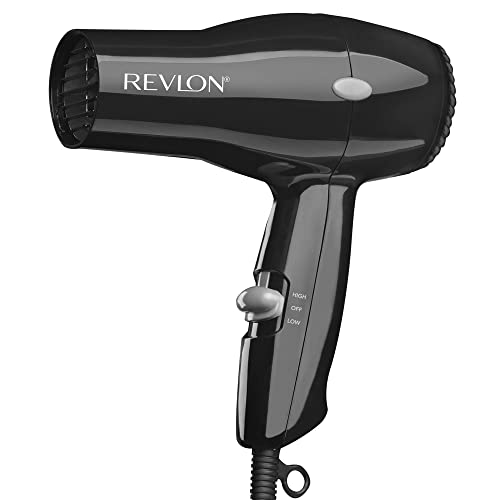
Best for: travel bags and second-bathroom duty Skip it if: you want a cool shot on a third speed
At 1.18 lb and 7.25 x 3.38 x 9.38 in, this is the smallest, lightest dryer here, and it is the cheapest of the seven. For a straight-hair user who already has a main dryer and wants a second one for the gym bag or a suitcase, that combination is hard to argue with. Revlon rates it at 1875W, which is the same wattage rating as the Conair 209L and the Wavytalk despite the compact frame.
Revlon lists two heat and speed settings plus a cool-shot button, and calls out a removable end cap for cleaning the intake. That last point is the one shoppers miss: an intake choked with lint costs a dryer more airflow than any wattage upgrade adds. Being able to pop the cap off makes daily maintenance realistic.
The trade-off is control. Two settings is fewer than the three-setting picks, and there are no attachments in the box for a precision straight finish. If your straight-hair routine is wash, rough-dry and go, this is fine. If you want to angle a concentrator down each section for a smoother cuticle, one of the picks above is a better fit.
Pros:
- Lightest published weight here at 1.18 lb
- Cheapest of the six here
- 1875W in a compact 7.25 in body
- Removable end cap for cleaning
Cons:
- Only two heat and speed settings
- No attachments in the box
- No published warranty length
6. REVLON One-Step Straightening Brush Hair Dryer — Runner-up
The One-Step folds the dryer and the round brush into one tool, which is the fastest route to a straight finish if you do not already own a round brush.

Best for: straightening in one pass without a separate brush Skip it if: you already own a round brush you like
This is the odd shape in the set on purpose. Instead of a nozzle, it carries a paddle brush head, so the airflow moves through the bristles as you pull them along the strand. Revlon lists 1.65 lb, three heat settings including a cool shot, and calls out tourmaline ionic construction. For straight hair that just needs smoothing rather than curling, the one-tool approach cuts your styling time and your arm fatigue.
The dimensions run 10.3 x 4.1 x 11.5 in, which is the longest body here, but the length is mostly the brush head, not the motor housing. Weight sits close to the Shark's 1.66 lb, so this is not a featherweight. Revlon markets it for mid-length to long hair.
Two honest weaknesses. First, it is a hybrid: as a plain dryer for rough-drying before another styler, it is less flexible than a nozzle model. Second, it sells slower than the other picks, and older models with slower turnover sometimes signal a design that has been overtaken; the listing shows a 2015 release, the oldest in this set. If a one-pass straightener is what you want, none of that disqualifies it. If you already own a round brush, save the money and pick a concentrator dryer above.
Pros:
- Combines dryer and brush in one tool
- Three heat settings plus cool shot
- Tourmaline ionic construction, per Revlon
Cons:
- Longest body in the set at 11.5 in
- Slowest seller of the six
- Older 2015 design
7. Conair Ionic Hair Dryer with Concentrator — Best for beginners
The Conair 256NRL is the beginner pick because it publishes a limited two-year warranty at an entry price, which nothing else in that price band here does.

Best for: first-time buyers who want a printed two-year warranty Skip it if: you want more than a single concentrator in the box
For a first hair dryer, the specification that should decide the purchase is not motor rpm or ion output. It is the warranty printed on the listing, because it tells you how long the brand is willing to stand behind the tool. Conair publishes a limited two-year warranty on the 256NRL, and among the entry-price picks in this set that is the only stated warranty term.
The rest of the sheet is sensible. Weight is 1.21 lb, the second-lightest here. Dimensions are 8.56 x 3.5 x 11.3 in, wattage is 1875W, and the box includes a concentrator attachment for straight styling. Conair markets the ionic conditioning for frizz reduction across hair types, which is a claim, not a measurement.
The trade-off against the Conair 209L above is real: the 256NRL includes only the concentrator, not the diffuser, and it is an older 2010 design that shows in the sales rank. That rank is the highest number in this set, meaning it sells more slowly than the rest. For a straight-hair buyer, missing the diffuser is not a loss, and the older design is exactly what you want at this price: proven, documented, and covered by a printed warranty.
Pros:
- Two-year limited warranty, printed
- 1.21 lb published weight
- 1875W in a full-size body
- Concentrator included
Cons:
- Diffuser not included
- Oldest design in the set
- Slowest seller of the entry-price picks
What the wattage number actually tells you
Every dryer here that publishes a wattage figure lists 1800W or 1875W. That is not because the manufacturers agreed on a spec; it is because U.S. household circuits cap at around 1875W of sustained draw, so consumer dryers all bunch up against the ceiling. Wattage is the heater's power budget, not a measure of how fast air moves.
The number that would actually tell you drying speed is airflow: cubic feet per minute, or motor rpm as a proxy. Only slopehill publishes an rpm figure in this set (21,000 rpm claimed). Shark cites an air speed of 0-100 mph in under a second, and Wavytalk claims 2x faster drying without stating against what. These are marketing figures, not comparable measurements.
Practical read: assume every 1875W dryer here has similar heat output. Judge the drying-speed difference on:
- Concentrator design and how flat it points air along the strand.
- Motor claims, taken as attributed rather than proven.
- Intake size, since the cleanest intake wins over the shiniest brochure.
If two dryers list 1875W and you cannot separate them on airflow claims, decide on weight, attachments and warranty.
Which attachments matter for a straight blowout?
For a straight finish, only two matter, and one of them is doing most of the work:
- Concentrator nozzle. The narrow, slotted tip that flattens airflow into a thin sheet. Aim it down the shaft, root to tip, and it lays the cuticle flat.
- Cool-shot button. Not an attachment strictly, but the finishing move. Cool air sets the shape once heat has done the shaping.
The diffuser is not doing you any favours for straight hair. It disperses air into a soft cloud to keep curls intact, and on straight hair it mostly just slows drying. If your household is split between straight and curly heads, buy a dryer with a diffuser in the box; if it is only you, do not overpay for one.
Five of the seven picks include a concentrator: slopehill (two of them, actually), Shark, Wavytalk, both Conair models. The Revlon Compact ships without attachments, and the One-Step's paddle brush replaces both nozzle and diffuser. Match the box to your styling routine, not to the picture on the front of it.
How long will one of these last on daily use?
Honest answer from the data: the listings tell you almost nothing directly, and inference is limited. Two picks publish a warranty length, so that is where to look.
- Wavytalk Blown Away: 10 years.
- Conair 256NRL: limited two years.
- Revlon Compact, REVLON One-Step: "See Product Manual".
- slopehill, Shark SpeedStyle Pro, Conair 209L: no warranty length in the listing.
Warranty length is not a guarantee of lifespan, but it is the brand's own bet on failure rates. A 10-year commitment says Wavytalk expects most units to outlast it. A two-year Conair term is a normal small-appliance number.
Beyond paperwork, three habits extend any dryer's life more than the badge on the side: cleaning the intake screen weekly, letting the motor spin cool for ten seconds before you unplug, and never resting a hot barrel on a fabric surface. None of that shows in the listing. All of it makes the difference between a two-year dryer and a five-year one.
The verdict
For most people with straight hair, the slopehill Professional Ionic Hair Dryer is the right default. It publishes the only motor-speed figure in this set, ships with both a concentrator and a diffuser, and sits mid-price rather than premium. The 7.87 in body is compact enough for arms-up work, and three heat settings give you the control a proper blowout needs. The one thing it does not publish is weight, so if a stated figure is a hard requirement, look one row down.
If your hair is fine or your scalp runs hot, the Shark SpeedStyle Pro is the better buy. Shark publishes a 230°F air cap and adds a Scalp Shield mode, which is the case for paying the premium here. The cutoff is straightforward: if you have thick, mid-back straight hair that takes real airflow to dry, the slopehill's motor claim wins. If you have fine or medium hair and daily heat is the concern, the Shark's temperature control wins. Between those two decisions sits everyone who is starting out and wants a printed warranty, which is where the Conair 256NRL becomes the sensible answer.
FAQ
Is a lightweight hair dryer strong enough for thick straight hair?
A lightweight hair dryer can be strong enough for thick straight hair if it publishes a real airflow claim. The slopehill's stated 21,000 rpm motor and the 1875W picks from Wavytalk, both Conairs and Revlon all sit in the range where thick straight hair dries in a reasonable time. Weight has fallen enough across the category that the choice is airflow-first.
What is the lightest hair dryer in this roundup?
The lightest hair dryer in this roundup is the Revlon Compact at 1.18 lb, followed by the Conair 256NRL at 1.21 lb and the Wavytalk at 1.37 lb. Two picks (slopehill and Conair 209L) do not publish a weight, so they are excluded from the comparison. If a stated weight matters to you, the Revlon Compact is the answer.
Slopehill or Shark: which is better for daily straight blowouts?
Slopehill or Shark comes down to hair thickness and scalp sensitivity. The slopehill claims 21,000 rpm and ships with both a concentrator and a diffuser at a mid price, which suits medium-to-thick straight hair. The Shark SpeedStyle Pro publishes a 230°F air-temperature cap and a Scalp Shield mode, which suits fine hair and heat-cautious users. Pick on those two variables.
Do I need a diffuser if my hair is straight?
You do not need a diffuser if your hair is straight. A diffuser spreads airflow into a soft cloud to preserve curl pattern, and on straight hair it slows drying without adding smoothness. The concentrator is the attachment that matters for a straight blowout, because it flattens air along the strand. Buy a diffuser only if a curly-haired person shares the dryer.
Is a 1875W hair dryer worth it over a 1800W one?
A 1875W hair dryer is not meaningfully different from an 1800W model. The 75W gap is a 4% heater-power increase and it does not translate into visibly faster drying. U.S. dryers all cluster near the 1875W circuit limit, so treat wattage above 1800W as a rounding difference and decide on airflow claims, weight, attachments and warranty instead.
The move from here is simple: open the slopehill listing in a second tab, check the current box contents match the two concentrators plus diffuser described above, and confirm the model number reads 1902. If it does, you have the right dryer for a straight-hair routine that leans on airflow rather than gadgetry. If you have fine hair or a sensitive scalp, do the same check on the Shark SpeedStyle Pro instead. What makes the slopehill the right default is not that it is the flashiest or the cheapest; it is that it is the only pick here that publishes the number that actually decides drying speed, and it does so at a price that does not ask you to pay for a name.